
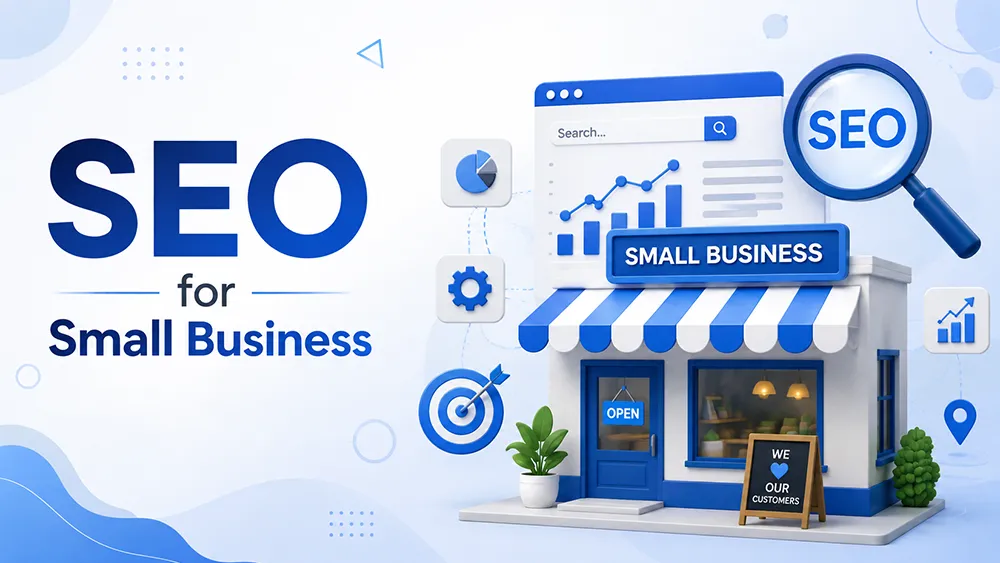
Achieving high organic rankings requires a balanced approach focused on content relevance, technical infrastructure, and off-page authority. Successfully executing modern SEO for small businesses requires a structured roadmap that covers every operational aspect of modern search performance.
1. Understand Your Target Audience
Before creating content or adjusting technical site code, you must clearly define your ideal customer profile. Understanding audience demographics, primary pain points, and decision-making processes dictates your overall search strategy.
Start by interviewing existing customers and reviewing service inquiries. Identify the exact language, questions, and concerns prospects raise during sales interactions. Converting these real-world conversations into search research ensures your website addresses true consumer needs rather than internal assumptions.
2. Perform Keyword Research
Keyword research identifies the specific search phrases consumers type into Google when searching for solutions. Rather than focusing exclusively on high-volume broad terms, smaller enterprises should focus on long-tail keywords. Long-tail phrases carry lower search volume but reflect higher user intent and face far less competition.
- Analyze Search Intent: Categorize target keywords into informational, commercial, and transactional intent to ensure your content matches user expectations.
- Identify Competitor Gaps: Evaluate competing sites to find valuable keywords they have overlooked or fail to cover thoroughly.
- Evaluate Keyword Difficulty: Select search terms where your site can realistically rank based on your domain authority.
- Leverage Local Intent: Target phrase variants that include regional qualifiers relevant to your customer base.
When site owners seek reliable SEO help for small business growth, proper keyword research forms the foundation of every successful recommendation.
3. Optimize for Local SEO
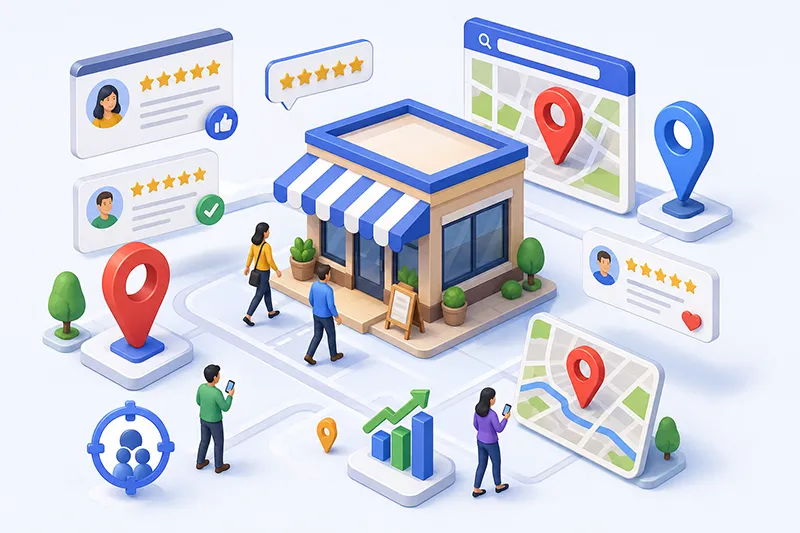
Local SEO helps physical stores and service centers connect with nearby customers. Working with top SEO companies for small business success helps brands optimize their local presence to attract high-intent local clients.
Claim and Complete Your Google Business Profile
Claim and verify your Google Business Profile completely with accurate business details, primary category, and operating hours. Add photos regularly and post weekly updates to show search engines your business is active.
Target Location-Specific Search Queries
Incorporate geographic terms naturally across your website pages. For instance, a business in Mumbai should target local searches by featuring areas like Navi Mumbai, Andheri, Bandra, Lower Parel, Powai, and nearby regions.
Maintain Consistent NAP Information Across Channels
Keep your business Name, Address, and Phone number identical on your website, social profiles, and web directories. Consistent details build algorithm trust and prevent search engines from getting confused by conflicting data.
Build Reliable Local Directory Citations
Submit your business details to respected regional directories and industry portals. Quality local citations confirm your physical operational location to search engine crawlers and improve your overall geographic ranking authority.
Collect and Respond to Customer Reviews
Encourage satisfied clients to leave authentic reviews on your Google Business Profile. Always respond to all feedback promptly and professionally to demonstrate reliable customer service and build long-term buyer trust.
4. Optimize Your Website Structure
A logical website structure helps search engine bots crawl and index your site efficiently while helping human visitors navigate intuitive content pathways. Organize your site using a hierarchical structure where broad topic pages link seamlessly to specialized subtopics.
Keep your page URLs clean, concise, and descriptive. Avoid auto-generated numeric strings or overly complex parameters in favor of static, keyword-focused directory paths. Ensure every key page remains accessible within three clicks from the main homepage to preserve link equity distribution.
5. Create High-Quality Content
Content remains the primary driver of organic search performance. Search algorithms continuously refine their ability to assess expertise, authoritativeness, and trustworthiness across web properties. Publishing thin or unoriginal content yields poor search visibility.
Focus on creating comprehensive resources that solve specific user problems better than existing search results. Incorporate clear data points, step-by-step instructions, and actionable takeaways. Format text with descriptive paragraphs, callout boxes, and custom visuals to maximize readability and hold visitor attention.
6. Optimize On-Page SEO
On-page optimization involves refining individual page elements to communicate topical relevance directly to search engine crawlers. Modern SEO optimization for small business relies heavily on granular page-level refinement.
- Title Tags: Craft compelling titles that include your target keyword within the first 60 characters to avoid truncation in search results.
- Meta Descriptions: Write persuasive summaries under 160 characters that encourage users to click through from the search results page.
- Heading Hierarchy: Use a single logical H1 tag for page titles, followed by structured H2 and H3 tags to organize sections logically.
- Image Optimization: Compress image files to reduce load times, use WebP formats, and write descriptive alt text featuring contextual keywords.
- Internal Linking: Contextually link related blog posts and service pages using anchor text that clearly describes the destination page.
7. Improve Technical SEO
Technical SEO ensures search engines can crawl, render, and index your website pages without encountering technical barriers. A flawed technical foundation actively prevents even exceptional content from ranking well.
- Website Speed: Optimize Core Web Vitals performance metrics, such as Largest Contentful Paint and Interaction to Next Paint, by minimizing server response times and reducing unneeded scripts.
- Mobile Friendliness: Implement fully responsive layouts that adapt dynamically to any screen size, offering frictionless navigation on mobile devices.
- HTTPS: Secure your domain with an SSL certificate to safeguard user data and satisfy search engine security standards.
- XML Sitemap: Generate and submit a clean XML sitemap directly to search engines to expedite content discovery.
- Robots.txt: Maintain an updated robots.txt file to guide search crawlers toward high-value pages while blocking private directories.
- Fix Crawl Errors: Regularly audit your site to identify and resolve 404 broken link errors, redirect loops, and canonicalization issues.
8. Build High-Quality Backlinks
Backlinks serve as digital votes of confidence from external web properties. Acquiring editorial links from reputable, contextually relevant websites signals to search engines that your content is trustworthy. Consistently offering relevant insights makes SEO for small businesses more effective over time.
Develop linkable assets like original industry studies, practical tools, detailed infographics, or comprehensive instructional guides. Reach out to trade publications, local business associations, and industry blogs to secure contextual links naturally. Avoid low-quality link building techniques, link networks, or paid link schemes that risk triggering algorithmic search penalties.
9. Improve User Experience (UX)
Search engines monitor how users interact with web pages after clicking through from search results. High bounce rates and short session durations often indicate that a page failed to satisfy user expectations.
A professional web design company can streamline navigation menus, implement clean typography, and balance whitespace to make content easy to digest and keep visitors engaged.
10. Track SEO Performance
Ongoing measurement is vital to understanding which optimization tactics drive tangible business metrics. Set up key performance indicator tracking to measure organic session volume, keyword positioning shifts, conversion completions, and user engagement metrics. Regularly reviewing this performance data helps refine your strategy over time.
For additional actionable advice on building high-converting campaigns, review these foundational small business SEO tips to maximize your digital visibility.
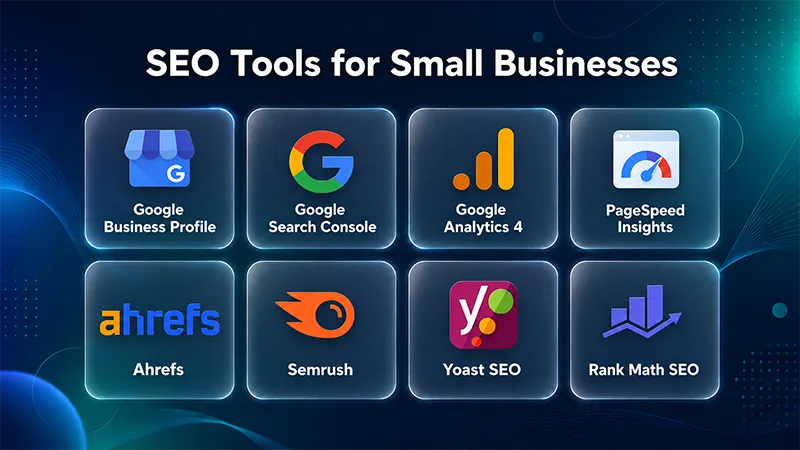
Leveraging appropriate software tools simplifies administrative tasks, automates audits, and exposes valuable competitive intelligence. Selecting the right software platform simplifies managing SEO for small businesses.
Google Business Profile
Google Business Profile is a free tool essential for managing local search presence. It lets small companies customize their business information, show up on Google Maps, publish updates, and manage customer reviews to attract nearby local clients effectively.
Google Search Console
Google Search Console helps website owners monitor and fix their site’s organic search performance. It provides clear data on keyword impressions, click counts, crawling errors, and index status directly from Google to help improve your search ranking.
Google Analytics 4
Google Analytics 4 delivers deep insight into website visitor behavior and traffic sources. Small businesses use it to monitor user conversion paths, track top-performing content, measure campaign results, and understand how visitors interact with site pages over time.
Google Keyword Planner
Google Keyword Planner helps businesses find relevant search terms and estimate monthly search volume. Designed primarily for Google Ads, it offers valuable data on user query trends, keyword competition levels, and phrase variations for organic SEO planning.
Ahrefs
Ahrefs is a powerful SEO suite built for backlink analysis, competitor research, and rank tracking. Small business owners can discover high-value content ideas, analyze competitor link profiles, and spot technical site issues that hinder organic search performance.
Semrush
Semrush offers a complete digital marketing platform for keyword research, site audits, and competitor monitoring. It helps small teams track daily keyword positions, inspect backlink profiles, and uncover strategic opportunities to outrank competitors on search engines.
PageSpeed Insights
PageSpeed Insights evaluates web page loading performance on both mobile and desktop devices. It measures key Core Web Vitals metrics and offers actionable optimization suggestions to make your website load faster for visitors and search engine crawlers.
Yoast SEO
Yoast SEO is a popular WordPress plugin that simplifies on-page optimization. It guides content creators with real-time feedback on focus keyword usage, meta description formatting, readable sentence structures, and XML sitemap creation without needing complex code.
Rank Math SEO
Rank Math SEO is a feature-packed WordPress plugin designed to streamline technical SEO management. It offers built-in schema markup tools, automated redirections, focus keyword scoring, and search engine integration to help small sites maximize search visibility efficiently.

Deciding whether to partner with an external marketing team is a pivotal choice for growing companies aiming to expand their online reach. While managing search strategies internally is possible, partnering with an agency allows team members to focus on core operational priorities.
Investing in the best SEO services for small business growth ensures your digital campaigns benefit from dedicated expertise, advanced tools, and proven execution frameworks.
Access to Specialized Expertise and Tools
Search engine optimization requires a diverse skill set ranging from technical coding and content writing to link building and data analytics. A dedicated agency brings a complete team of specialists who stay updated on algorithm changes. They also provide enterprise-grade software tools that are often too expensive for individual small businesses to purchase independently.
Time and Resource Efficiency
Managing organic search campaigns internally requires a significant time commitment that can pull staff away from daily business operations. Outsourcing your search marketing strategy frees up internal resources, allowing your team to focus on sales, customer service, and product delivery while experts handle your website visibility.
Faster and Consistent Execution
Achieving strong search rankings requires continuous effort, including regular technical audits, content publishing, and backlink outreach. Agencies have established workflows and dedicated staff to execute tasks efficiently without the delays that often happen when internal teams get busy with other business tasks.
Scalable Growth Strategies
As your business expands into new services or locations, an agency scales your marketing efforts. Executing strategic SEO for startups lays a strong digital foundation for rapid expansion. Experienced teams adapt campaigns seamlessly to meet ambitious growth targets. Their proven frameworks help you enter new markets quickly without hiring and training extra in-house staff.
Clear ROI and Advanced Reporting
Professional agencies use data tracking systems to monitor keyword positions, organic traffic trends, and lead generation conversions. They provide clear, actionable reporting that directly links your search marketing investment to measurable business growth and revenue results.